





















Like what you see?
Used Industrial Equipment – A Path to Lower Costs and Faster Purchases
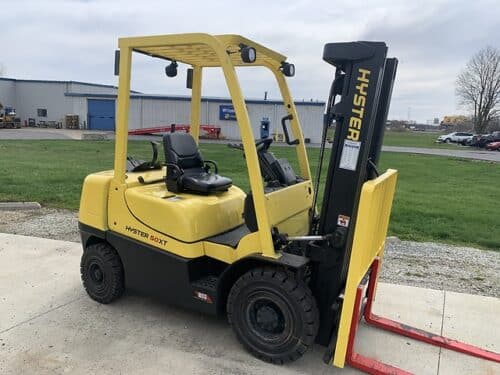
As nice as purchasing new industrial and material handling equipment can be, current pricing levels are today urging more and more buyers to evaluate used equipment as an equally viable choice. Although new equipment costs have started to correct after the last few years of inflationary trends, there is still a notable price gap between new and used options that makes used options highly attractive. In addition, the expansionary spending of the last decade has resulted in a very high population of healthy, great quality, low-hour equipment pieces available across most equipment categories (forklifts and smaller aerial lifts topping the list). To help buyers navigate used equipment options, we’ve prepared this article covering how to best consider used equipment as a solution to specific business needs, and then how to evaluate equipment against those needs. When done right, pursuing, and purchasing used industrial equipment can cut significant cost and complexity out of the buying process.
Solving for Specific Business Needs
There are multiple roads that lead to used industrial equipment, each with its own set of financial, technical, and risk components specific to your business’ needs. We recommend pulling these needs apart so as to better understand the priorities a company will be addressing by obtaining used equipment, allowing buyers to ensure that the road they’re taking is the correct one. Here are the most common buyer interests that we come across, and how they can factor into purchasing decisions.
- Functionality – as businesses grow, different work tasks, load compatibility, or other functional changes are bound to occur. Buyers facing such changes are often looking for equipment simply to accommodate the new work demands at hand. Used equipment is a particularly good option because specialty equipment tends to be treated better and may come at a great value compared to purchasing new. In addition, sometimes existing equipment can be outfitted with used accessories or add-on components to achieve the newly required functionality, cutting the expense even further.
- Capacity – beyond functional changes, volume increases are equally common reasons driving a search for additional equipment. As businesses expand, their daily unit volumes increase proportionally, driving to either larger unit sizes (such as stepping up from single packages to bulk pallets) or higher total throughput (such as increasing total concurrent movements). Either way, the business needs higher capacity out of their equipment fleet, and looking into used equipment is an excellent place to start for both cost and lead time reasons. When purchasing for capacity expansion, buyers may be willing to pay more for higher reliability and day-one utilization, as well as for any added benefits that can help handle the volume.
- Operational Efficiency – for businesses where volume is fairly static, but margins could be improved, efficiency tends to be the motivating factor in searching for additional equipment. Aging existing equipment may be taking too long to charge, need undue downtime for constant maintenance, or may not perform at its original full capacity. Outdated technologies and lacking modern features might also drain expense dollars due to missed opportunities. In such cases, buyers are likely to look for gently used, younger models that offer higher uptime, longer operating windows, and less maintenance at attractive prices lower than new. Buyers here may also benefit from models with still active or extendable original factory warranties.
- Cost Management – while efficiency serves to maximize operating margin, cost management looks at the other end of the spectrum in order to stop financial bleeding. Old equipment that is used for applications it was not originally purchased for, in spaces not designed for that equipment, and where wear-and-tear has led to an excessive maintenance cost sink, is ripe for replacement to manage the associated high costs. Buyers here are often looking for much better fitting equipment to their applications, valuing equipment health and reliability over added features.
- Strategic Investment – when opportunity arises, savvy managers know to strike. Upcoming busy seasons, volume discounts, manufacturing reshoring, new projects, growing client bases, and all sorts of similar opportunities may suggest that additional equipment is needed. In these cases, buyers may passively look for used equipment to add to the fleet over longer periods of time, having no immediate need, but keeping an eye out for a strategic investment when conditions are right.
Evaluating Used Industrial Equipment
With a specific business objective in mind, buyers can now proceed to locating and evaluating equipment pieces. We’re jumping right to the evaluation stage as a matter of providing the most impactful suggestions, but this is not to say that the upstream equipment search and seller vetting steps are trivial. We covered an extensive list of questions to ask when purchasing equipment in this separate article, which will help fill in the gaps of what to find out between framing your business needs and evaluating a short list of potential equipment purchases.
- Cost – most used equipment evaluations begin with price. Each buyer’s desired price point is unique, as is their general price range between new and used equipment specific to their industry and region. We encourage buyers to look not just at the purchase price, but also the expected maintenance and operational costs into the future. The concept of Total Cost of Ownership applies here, and can be a useful tool for buyers to understand if the lower initial price will stand up against the potentially high costs of maintenance (as a function of the unit’s health and age).
- Technical Specifications – when buying new equipment, buyers can hand-pick units that precisely match their technical requirements in terms of weight capacities, operating hours, charge times, and so on. With used equipment, buyers are limited to what equipment pieces are available at that time, which almost certainly will not be a perfect match to their application. For this reason especially, buyers must take the time to evaluate a used equipment piece’s technical specifications to assure that it will perform safely and reliably for their needs.
- Operational Test – just like when purchasing a car, buyers should always test drive any prospective equipment pieces during their evaluation process. An operational test should be performed in conditions that roughly match a buyer’s work environment, if possible, allowing the buyer to get a good representative feel for the equipment. Lift equipment should be tested under load and up to its max height, and mobile equipment should be driven up to its max speed over appropriate terrain. A trained and experienced equipment mechanic should be brought along for a technical once-over as well. Aside from a mechanic, our best evaluation tools are our ears, eyes, and noses, catching any hint of issues that should be brought up to the seller.
- Availability – typically, used equipment is immediately available, and buyers too often assume this without asking. If a buyer is banking on quick availability of the equipment piece, this should be discussed and evaluated right away. In some cases, sellers will want a hold period for payment to clear, or may have a required pre-delivery shop service that has to be scheduled. In other cases, neither party is prepared to transport the equipment to the buyer’s location, requiring a third-party hauler to be engaged and scheduled. Buyers should always inquire about availability as it may impact their decision, especially when the idea to purchase used was specifically due to an imminent schedule requirement.
- Use and Maintenance History – even after in-person evaluations and test drives, there can still be plenty of hidden gremlins in a used equipment piece that warrant investigation. The best way to divulge any concerns here is to request and review detailed records of the unit’s history, both general use and maintenance. Operator logs, charge logs, telematics history, maintenance tickets, replacement part receipts, major factory troubleshooting logs, recall notices – all of these and more are useful historical records that buyers can request. Some of the worst situations we’ve seen with used equipment involve a seller withholding of historical information – one example was a used shipyard forklift that had been exposed to ten years of saltwater, causing excessive rust and corrosion out of direct sight that would have justified a much lower price.
MH Equipment is one of the largest material handling service providers in the United States, with 30+ locations and over 1,000 employees serving customers in upper Midwest and Eastern states. Our mission is to deliver exceptional service in material handling equipment sales, service, rental, certification & training, emergency response, and engineering. From complete fleet management to warehouse design, vehicle sales to roadside response, our local experts are here to serve your needs. For more information or to discuss your application, please call us at (308) 210-7387 or email us here.
Posted in ReSale
We are here to help.
Count on our friendly support team to provide the guidance you need. (614) 871-1571
