














Like what you see?
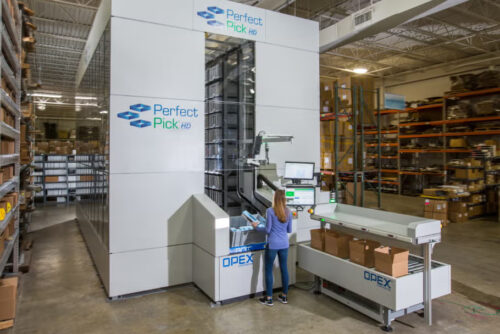
Many businesses struggle to accurately assess the value of new Automated Storage and Retrieval System (AS/RS) projects. Project analysts often overestimate benefits and underestimate costs. To get a clear picture, it’s best to bring together engineers, managers, and accountants to create a comprehensive cost-benefit analysis (CBA).
Key Definitions
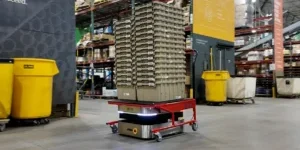
- Automated Storage and Retrieval System (AS/RS): An advanced system with robotic hardware and smart software that automatically handles products without human labor. Think of robotic sleds moving pallets in a dense racking system.
- Cost-Benefit Analysis (CBA): A formal process that compares a project’s costs against its benefits to determine if it’s viable. A good CBA includes both financial and non-financial factors, giving executives a complete view of the project’s value.
Our goal here is to show you how to apply a CBA specifically to an AS/RS project.
Primary Criteria for an AS/RS Cost-Benefit Analysis
A thorough CBA for any automated warehouse solution should cover a wide range of criteria:
Investment Elements
- Development: Upfront planning, technical design, and risk assessment are crucial to avoid making a bad investment based on false assumptions.
- Capital Expenditures (CapEx): The main financial metric, including engineering, procurement, and implementation costs.
- Real Estate: Costs and benefits associated with acquiring or re-using property, which can also increase asset and tax values.
- Construction & Installation: The time, effort, and potential disruption to operations during the physical build-out of the system.
- Deployment: The multi-month or multi-year process of testing, training, validation, and optimization before the system is fully operational.
Operational Elements
- Labor: AS/RS projects solve labor challenges like staff shortages and high labor costs since they require only a fraction of the headcount of traditional systems.
- Utilities: Automation trades human labor for powered equipment, increasing the consumption of electricity, compressed air, and other utilities.
- Maintenance & Spares: Ongoing costs for maintenance and spare parts are necessary to keep the AS/RS running consistently over its lifespan.
- Ongoing Support: Due to their technical and often proprietary nature, AS/RS systems require support from the manufacturer or an authorized reseller to resolve issues.
- Indirect Impacts: This catch-all category includes often overlooked factors like changes in insurance coverage, employee resistance, or stakeholder scrutiny.
Performance Elements
- Volume & Throughput: Key metrics used to justify AS/RS, often measured by labor and space savings per unit.
- Responsiveness: AS/RS systems respond instantly to orders, benefiting managers, customers (with faster fulfillment), and accounting (faster payments).
- Efficiency: Automated storage systems are highly efficient in all measures, from labor productivity to perfect order rates and space utilization.
- Reliability: Properly maintained AS/RS solutions are highly consistent, providing a level of reliability that traditional systems cannot match.
- Quality Assurance: These systems eliminate human error and can inspect quality in real time, reducing rework and maximizing customer satisfaction.
Organizational Elements
- Business Continuity: Automated systems provide insulation from market volatility, offering higher business continuity than traditional warehouses.
- Regulatory Compliance: Many organizations use AS/RS to address regulations related to worker safety, building codes, and sustainability.
- Future Growth: An AS/RS can be designed with modularity in mind, allowing for easy expansion with minimal downtime and costs.
- Competitive Advantage: An AS/RS project can be a key market differentiator, turning its benefits into a real commercial advantage.
- Strategic Value: AS/RS systems enhance a brand’s reputation, attract new talent, and bolster stakeholder confidence.
Example AS/RS Cost-Benefit Analysis Worksheet
Here is an example worksheet to help you compile and compare costs and benefits for each of the criteria described above. Every business will have different scoring metrics and costs, so it’s important to customize this framework.
| Analysis Criteria | Costs | Benefits |
| Investment Elements | ||
| Development | 6 Months Due Diligence | +/- 15% Budget Accuracy |
| CapEx | 40% Cash, 60% Financed | Minimal Liquidity Impact |
| Real Estate | None, Use Existing Land | Total CapEx Savings |
| Construction & Installation | 12 Month Timeline | GMP Contract Protection |
| Deployment | 6 Month Rollout | Onsite Training & Optimization |
| Operational Elements | ||
| Labor | Reallocate 45 Positions | Significant Payroll Savings |
| Utilities | Electricity Costs +10% | Forklift Charging Costs -75% |
| Maintenance & Spares | Maintenance Costs +5% | Forklift Fleet Costs -60% |
| Ongoing Support | New Monthly Support Costs | 24/7 OEM Support Available |
| Indirect Impacts | Insurance Premiums Increase | Workman’s Comp Decrease |
| Performance Elements | ||
| Volume & Throughput | Add Max-Density Option Costs | 3x Velocity Increase by Year 5 |
| Responsiveness | No Added Costs Beyond CapEx | Order Turnaround Time -50% |
| Efficiency | Quarterly Internal OEE Audits | Mean Error Rate -85% |
| Reliability | Weekly Rolling Reliability Inspections | 99.99% Uptime Guaranteed |
| Quality Assurance | Add AS/RS to Quality SOPs | Damage Reject Rate -95% |
| Organizational Elements | ||
| Business Continuity | Add ERP-Integration Costs | Fully Avoid Labor Shortages |
| Regulatory Compliance | Third-Party Auditor Costs | Solves City High Pile Requirements |
| Future Growth | Add Modular Option Costs | 10x Expansion Potential |
| Competitive Advantage | Launch Marketing Campaign | New Customer Attraction |
| Strategic Value | Issue Industry Press Release | New Investor Attraction |
Remember, a CBA is not a replacement for other financial tools like Return on Investment (ROI) or Net Present Value (NPV). Instead, it should be a comprehensive tool that incorporates these other analyses to provide a holistic and responsible evaluation.
MH Equipment is one of the largest material dealers in the United States, with 30 + locations and more than 1,100 employees serving customers in 10 upper Midwest and Eastern states. Our mission is to deliver exceptional service in material handling equipment sales, service, rental, certification & training, and engineering. From complete fleet management to warehouse design, vehicle sales to roadside response, our experts are here to serve your needs. For more information email us here.
We are here to help.
Count on our friendly support team to provide the guidance you need. (304) 776-6900
