














Like what you see?
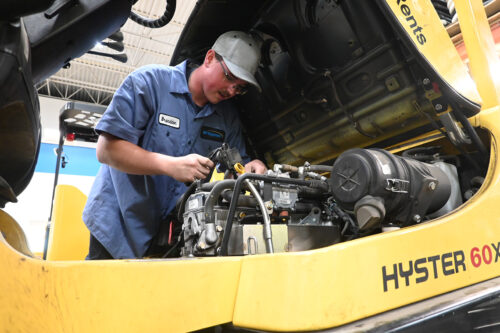
Poor forklift maintenance can be just as damaging as no maintenance at all. When cost-cutting takes priority, maintenance often becomes a rushed “check the box” process, and costly repairs are put off. This can lead to forklifts failing unexpectedly, just like lifts that receive no maintenance.
Common Mistakes in Forklift Maintenance
Poor maintenance practices usually don’t happen on purpose. They often start with small, seemingly harmless decisions that build up over time. The good news is that these mistakes are well-known and can be prevented by attentive fleet managers before they cause serious problems.
- Delaying Maintenance Intervals: Putting off maintenance with excuses like “we haven’t used the lift much” can quickly accelerate wear and tear.
- Ignoring Signs of Issues: Dismissing unusual noises, poor responsiveness, or declining performance to avoid service costs can turn minor problems into major risks.
- Checking Fluid Levels, Not Quality: Forklift fluids lose both volume and quality over time. Checking quality is more telling, as it can warn of engine wear and mechanical damage that could lead to more serious issues.
- Not Following a Service Schedule: Forklift manufacturers create detailed maintenance schedules for a reason. Ignoring these schedules can lead to missed risks and may void warranties.
- Treating Symptoms, Not Root Causes: Fixing a symptom instead of the underlying cause can lead to much more expensive repairs. For example, continually topping off a leaking gearbox instead of replacing a faulty gasket can turn a small fix into a costly rebuild.
- Using Incorrect Parts: While it’s tempting to use “close enough” parts to save money, even small differences can lead to sudden failure.
- Not Following OEM Requirements: Using parts and practices not specified by the Original Equipment Manufacturer (OEM) can lead to unsafe operation. This often happens when unqualified technicians are used.
- Installing Generic Components: Generic parts may be cheaper, but you must ensure they are of OEM-equivalent quality and don’t void the lift’s warranty.
- Poor Recordkeeping: Maintenance is an ongoing process. Failing to keep detailed records creates blind spots for technicians, making it harder to track risks and patterns.
- Failing to Test: Even the best maintenance departments can fall short if they don’t perform pre- and post-service tests. Pre-service tests help with diagnostics, and post-service tests confirm that all work was done correctly and didn’t cause new problems.
Avoiding Poor Forklift Maintenance
You can avoid poor maintenance practices by proactively tracking key metrics and taking a proactive approach.
Pledge to Prevent These Mistakes
Fleet managers can use the list above as a guide. Start by raising awareness and making a pledge to do the opposite of these common mistakes. Meet with your team to promote a culture of preventative maintenance. Translate each mistake into a clear team objective, such as:
- Perform maintenance on time, every time
- Investigate and resolve every trouble sign
- Use only certified service technicians
- Use only OEM or certified aftermarket parts
- Perform pre- and post-service tests
Track Indirect Indicators
Beyond maintenance-specific metrics, you can monitor other business metrics that often reveal poor maintenance. When these indicators cross certain thresholds, you can take immediate action. Look for things like:
- High maintenance costs
- Frequent downtime or “out of service” events
- High quantity of reported operator issues
- Poor overall fleet performance
- An increase in safety issues
MH Equipment is one of the largest material dealers in the United States, with 30 + locations and more than 1,100 employees serving customers in 10 upper Midwest and Eastern states. Our mission is to deliver exceptional service in material handling equipment sales, service, rental, certification & training, and engineering. From complete fleet management to warehouse design, vehicle sales to roadside response, our experts are here to serve your needs. For more information email us here.
We are here to help.
Count on our friendly support team to provide the guidance you need. (304) 776-6900
