
Forklift Operator Refresher Training in Industrial Material Handling
When discussing material handling safety, the first topic to come to mind is almost always industrial fork trucks, and for good reason. Forklifts are involved in a disproportionate number of annual warehouse accidents involving both novice and experienced operators alike, which makes forklift operator training a major part of every warehouse’s safety management program.
With experienced operators in particular, designing, delivering, and reinforcing experienced forklift driver training is a key part of combating the natural forces of complacency and disengagement that set in over time. To this end, let’s look at ways that your company can improve refresher training practices for your experienced operators.
When Refresher Forklift Training is Required
What drives the need for refresher training to begin with?
OSHA Forklift Refresher Training Requirements
The United States Occupational Safety and Health Administration (OSHA) outlines specific OSHA forklift refresher training requirements stating that a forklift operator is required to take refresher training whenever one of the following conditions occurs:
- A forklift operator has been observed operating the vehicle in an unsafe manner
- An operator has been involved in an accident or near-miss incident
- An operator has received an evaluation that reveals that the operator is not operating the truck safely
- An operator is assigned to drive a different type of truck
- The condition in the workplace changes in a manner that could affect safe operation of the truck
- Three years pass – every forklift operator must be evaluated at least once every three years
While the above is what the law sets as minimums, organizations are free to implement their own forklift refresher training practices beyond these requirements should they choose.
Some world-class organizations will conduct an annual safety review and hands-on practice workshop for all forklift operators (not just those with expiring credentials) well ahead of the three-year cadence, because safety is that important to their company culture. Furthermore, many organizations will host training specifically for experienced operators so as to manage out bad habits and reinforce fading topics proactively, even when OSHA doesn’t require it. Though it will take a little work, businesses are well served by experimenting with different training cadences and durations to find what works best.
Key Topics for Refresher Forklift Training
Per OSHA, only the infracted topics that triggered refresher training should be reviewed, avoiding duplicate training on topics in which the forklift operator is otherwise found competent. In the case of the three-year evaluation, a qualified person only needs to observe and confirm that an operator still possesses adequate skills to operate the lift safely, skipping repeat training if so.
While these minimums will satisfy OSHA, we find that many of our customers’ insurance providers and internal Environmental Health & Safety departments require classroom-format warehouse safety refresher courses annually at maximum. We fully support an annual cadence ourselves, and suggest conducting this training around topics geared towards experienced operators:
- Review Prior Training Topics – to set a solid foundation for productive forklift operator refresher training, we recommend a medium-detail recap of all prior training topics such as operating instructions, maneuvering, visibility, speed limits, stability, load limits, and overall safety requirements.
- Safety Expectations – companies can use refresher forklift training sessions as a great opportunity to touch on their company’s specific safety expectations, discussing employee responsibilities, safety-oriented behaviors and mindsets, new and updated safety requirements, and both good and bad safety examples to drive awareness.
- Load Calculations – performing accurate forklift load calculations are is a perishable skill and are always worth reviewing to keep fresh. Looking at forklift load tables, load deratings, centers of gravity, load limits, and other technical calculations do not take long, and often stimulate beneficial conversation and questions.
- Ergonomics & Physical Care – poor operator ergonomics and posture are bad habits that form slowly over time, especially in facilities that don’t actively monitor on-lift ergonomics. Sharing a few photos of good and bad posture examples, plus pointing out common risk factors that cause operators physical injury is well worth a little time on the agenda.
- Review Any Industry or Company Changes – industrial material handling best practices, technologies, and requirements constantly change, both at the company- and industry-wide levels. Wrapping up a successful forklift operator refresher training session with mention of such changes that have occurred (or are expected to take place in the near future) goes a long way to keep operators up to speed.
Making It Stick – Going Beyond Refresher Forklift Training to Ensure Engagement
For many material handling organizations, safety training schedules are directly tied to safety metrics. When safety infractions increase, more training sessions are scheduled until infractions drop. While this relationship tends to work well, sometimes it causes a runaway feedback loop that makes matters worse, not better. In these cases, more training begets more safety infractions, which tells us that there’s another variable involved in the safety training equation: operator engagement.
As we’ve observed in the field, safety training that is conducted too frequently, in too mundane a fashion, in overly long sittings, or in similarly lackluster ways can very quickly burn out attendees. Here, operators can just as easily disengage and make training counterproductive. Clearly, refresher training must be both practical and varied to be effective. Replacing traditional training methods with creative solutions is a great way to maximize forklift recertification benefits and increase experienced employee engagement while still delivering training material, such as in these examples:
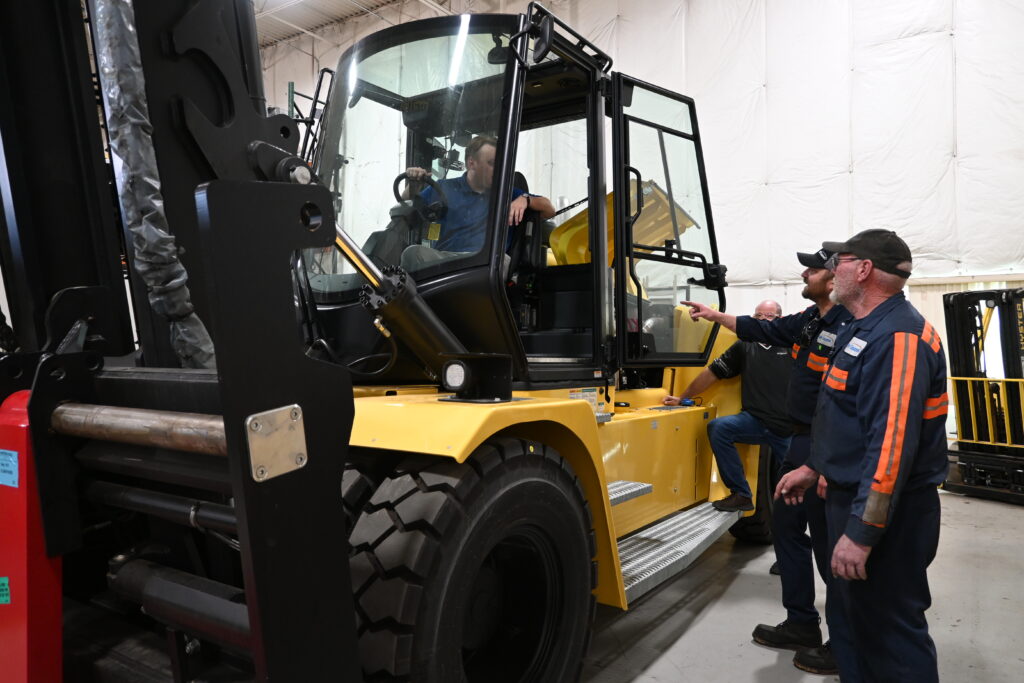
- Hands-On Practice – all else equal, practical skill exercises always result in higher understanding and knowledge retention than classroom-style learning. In addition, operators forge a much stronger connection between abstract concepts and actual application when delivered via hands-on training.
- Host a Safety Round-Table – employees feel valued when included in conversations that lead to recognition, collaboration, and accomplishment, and valued employees retain and amplify topics from such conversations. For this reason, companies can turn safety training into safety round-table sessions where employees can share ideas, reinforce best practices, and contribute to company-wide safety improvements.
- Share Training Responsibilities – delegating safety responsibilities to capable employees is another way to drive engagement, allowing staff to take part in monitoring, cross-training, coaching, and documenting safety practices out on the warehouse floor. For example, having a shift lead take on responsibility for showing other forklift operators how to properly enter and exit truck trailers simultaneously improves that crew’s safety awareness while also reinforcing key safety training topics without waiting for scheduled training.
MH Equipment is one of the largest material dealers in the United States, with 30 + locations and more than 1,100 employees serving customers in 10 upper Midwest and Eastern states. Our mission is to deliver exceptional service in material handling equipment sales, service, rental, certification & training, and engineering. From complete fleet management to warehouse design, vehicle sales to roadside response, our experts are here to serve your needs. For more information, email us here.