



















Like what you see?
Managing a Warehouse’s Many Material Streams, Including People
As we often get to see firsthand when visiting our customer locations, there are many more material streams crossing a warehouse than just pallets carried on forklifts. No matter the industry, material handling businesses must actively manage traffic streams of all types in order to keep their site’s productivity and safety levels high, which can include everything from individual product packages to large contingents of staff. To handle these unique load types, warehouse managers have increasingly turned to alternative warehouse vehicles known collectively as Personnel and Burden Carriers. There are many unique models and designs that fall within this category of warehouse equipment, each with their own ideal applications and use-cases that together can solve all of a warehouse’s many transportation and material moving challenges.
To start, let’s establish that personnel and burden carrier vehicles are functionally not forklifts or their equivalent. The entire category of personnel and burden carrier vehicles exists to provide fleet managers with alternatives to forklifts, strategically serving different objectives and budgets. In other words, these vehicles are most often selected because they are smaller, more maneuverable, less costly, and otherwise more appropriate to a given application than a standard forklift. In these ways, personnel and burden carrier vehicles specifically fulfill core material handling activities that have historically fallen between the capabilities of a forklift and a manual pushcart.
Personnel & Burden Carrier Vehicles in Industrial Material Handling
Next, let’s break down the category of personnel and burden carrier vehicles into four primary models:
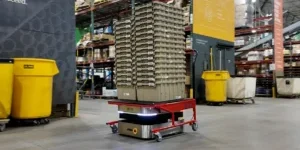
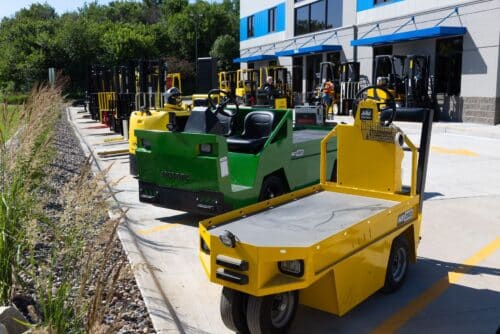
- Burden Carriers – also known widely as tow tractors, burden carriers are small, motorized vehicles specifically designed to pull heavy loads around a warehouse. Burden carriers are operated by sitting or standing drivers, often have a small cargo area for loose cartons or products, and hook up to all types of tow trailers where large quantities of heavy products can be placed. Where forklifts are designed to lift products into the air, burden carriers are simply meant to effectively move products between locations at floor level.
- Stock Chasers – stock chasers can be thought of as smaller, more nimble versions of burden carriers that emphasize speed and maneuverability over high towing capacity. Stock chasers are rapid response vehicles in nature, featuring just enough room for a standing operator and a moderately sized cargo deck to hold goods. Most warehouses use stock chasers for quick out-and-back runs to grab low volumes of small parts.
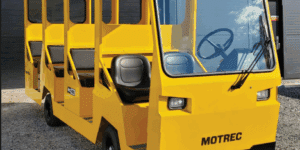
- Personnel Carriers – crossing large warehouses and logistics sites on foot can be tiresome as well as unsafe, a condition that can be completely solved using personnel carrier vehicles. Personnel carriers serve as industrial taxis, ferrying groups of people to their destinations comfortably. Most personnel carriers offer room for four to eight passengers and can expand to higher passenger counts by connecting additional cars behind the carrier to form a passenger train.
- Walkie Tuggers – in some cases, odd-shaped or oversized materials must be transported across long distances that require some type of motorized assistance but occur so infrequently or with so many stops along the way that a dedicated vehicle is not worth the expense. In these cases, walkie tuggers are great solutions, which are a type of powered cart guided by a walking operator but propelled by a high-capacity motor.
Common Personnel & Burden Carrier Applications
To help readers imagine how personnel and burden carrier vehicles are used in real-life material handling environments, let’s review a handful of common applications:
- Random Pick Missions – unplanned, one-off pick missions are great candidates for burden carriers and stock chasers, allowing employees to quickly retrieve small pick quantities to fill counter orders, replace rejects, track down missing inventory, and return over-picks to stock.
- Excess Demand Spikes – in peak periods, rental burden and personnel carrier vehicles can quickly help businesses meet demands without purchasing full-sized forklifts or larger vehicles. In addition, small form-factor carriers can more easily negotiate tight warehouse spaces crammed with surge inventory.
- Oversized and Unique Load Handling – large rolling containers, trash dumpsters, luggage carts, heavy equipment dollies, battery carts, and mobile workstations are great candidates for moving around using tow tractors. This is especially true in very heavy weight classes exceeding 10,000 lbs. as commonly encountered at airports, institutional campuses, and heavy industrial sites.
- Visitor and Staff Transportation – ferrying people around large sites is a universal challenge, whether for employee shift changes, supervisor inspections, visitor tours, VIP hosting, or maintenance rounds. Personnel carriers can be used for both indoor and outdoor taxiing, and many vehicle models can double as burden carriers when not needed for personnel transportation.
- Event Services – commercial, recreational, entertainment, and similar events can all benefit from the rapid material and guest transportation capabilities offered by personnel and burden carrier vehicles. All vehicle types are readily available for rent, though some sponsors that host multiple events in a local region prefer to lease or purchase vehicles for ongoing use.
- Maintenance and Utility Activities – when equipment or facility systems experience unexpected interruptions, maintenance response timelines can never be fast enough. Maintenance teams rely heavily on burden carriers to get tools, service equipment, and personnel to work as quickly as possible, often using these vehicles for successive trips to get parts to the shop for technical repairs and back out for installation once complete.
Looking Beyond Equipment Rentals – Maximizing the Value of Personnel & Burden Carriers
All the above application examples come directly from our team’s experience working with material handling clients to solve specific challenges in their businesses, and we couldn’t be more grateful for the trust our clients place in us to help. Year after year, our clients are hard-pressed to continually cut costs, improve efficiencies, and generally do more with less. And year after year, we help our clients respond to these market demands by offering deeper value into their warehouse fleet portfolio, which is one of the drivers that brought us to offer personnel and burden carrier vehicles in the first place. For readers interested in maximizing the value of their warehouse fleet operations, we would be eager to help in the following ways (and more):
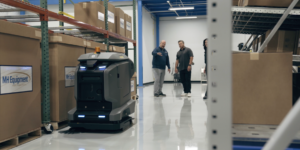
- Onsite Needs Assessment – our material handling specialists routinely visit client sites to understand their challenges, forecast equipment demands, and specify solutions that optimize operating costs and fleet-wide capacity.
- Supply – equipment rental, leasing, and sales are just the tip of the spear, as we can also craft long-term supply contracts, multiple provision options, buy-back and consignment resales, and on-call usage options that strategically serve a client’s ongoing needs.
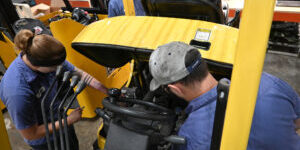
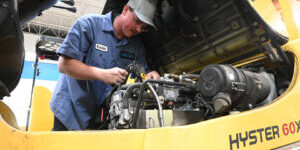
- On-Site Service – with our over five hundred certified service technicians, we can offload maintenance and repair tasks from clients for both new and existing equipment. In addition, our technicians are backed up by our massive in-stock parts inventory, fulfilling most part orders the same day.
- Fleet Management Support – our inhouse service advisors manage multiple clients’ entire fleet maintenance operations, including remote monitoring of charging conditions, staff training, maintenance schedules, safety compliance, OSHA reporting, and annual service plans.
- Operator Training and Certification – our inhouse trainers actively train and certify our clients’ operators on all types of lifts and equipment, in complete compliance with OSHA and local regulatory requirements.
MH Equipment is one of the largest material handling service providers in the United States, with 34 servicing locations and over 1,000 employees serving customers in 10 upper Midwest and Eastern states. Our mission is to deliver exceptional service in material handling equipment sales, service, rental, certification & training, emergency response, and engineering. From complete fleet management to warehouse design, vehicle sales to roadside response, our local experts are here to serve your needs. For more information email us here.
Posted in New & Used Equipment, Warehouse
We are here to help.
Count on our friendly support team to provide the guidance you need. (614) 871-1571
